You go to a cozy cafe. You walk up to the counter, look at a nicely written menu, and order an iced latte. A few minutes later, the barista hands you a nice, refreshing drink.
Behind that counter, someone had to design that menu. Someone had to order the coffee beans from a farm, connect the water pipes to the espresso machine, maintain the electricity, and manage the storage room so the milk does not spoil. If any of those pieces fail, you do not get your latte.
Building a website or a mobile app is like running that cafe.
When you browse online, you only see the front counter. But behind the scenes, there's an engine room that keeps everything running. This brings us to the commonly used role in tech today:
the full-stack developer.
You can come across this title in many places – job boards, LinkedIn profiles, coding bootcamps. But what does it mean? Are these developers tech superheroes who can build giant platforms fully by themselves? Or is it just a corporate label for someone who does two jobs for the price of one?
Let’s break down what a full-stack developer really does!
The Split: Front-End vs. Back-End
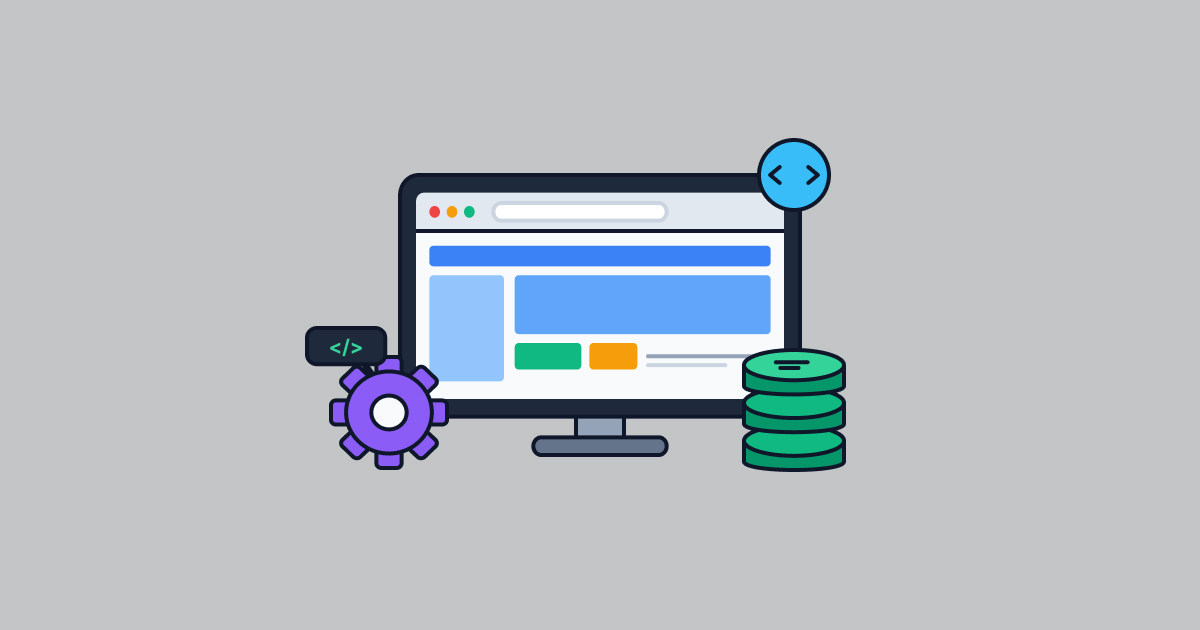
To understand the full picture, we first need to look at the two sides that make up any digital product. In tech, we call these the front-end and the back-end.
If you’re new to programming, these terms can feel a bit abstract. Let’s look at a comparison table to see how they differ:
| Feature | The front-end | The back-end |
|---|---|---|
| What it is | Everything the user sees, clicks, and interacts with directly. | The hidden logic, databases, and servers that power the app. |
| Main goal | To be beautiful, intuitive, fast, and accessible on all screens. | To be secure, organized, fast, and able to handle heavy data. |
| Core tools | HTML, CSS, JavaScript | Python, Node.js, SQL, Java, PHP |
| Example | The look of a login button, the font, and the sliding animation. | Checking if your password matches the one stored in the system. |
Let’s explore these two sides a bit more.
Front-End
The front-end is the client-side of an application. When you open an app like Coddy, every color, every button, the dark mode toggle, and the text layout belong to the front-end.
Front-end developers make sure that a website looks great on a giant desktop monitor, a medium-sized tablet, and a tiny smartphone screen. They use HTML to build the skeleton of the page, CSS to dress it up with styles and layouts, and JavaScript to make things move and react when you click them.
Back-End
The back-end is the server-side. It lives on powerful computers (servers) far away in the cloud.
When you type your email and password into a website and click "Log In," the front-end does not know if your password is correct. It takes your data, wraps it up safely, and sends it to the back-end. The back-end runs a script (perhaps written in Python or Java), talks to a database (where all user profiles are kept), verifies who you are, and sends a green light back to the front-end.
Without the back-end, a website cannot save your progress, it cannot process payments, and it cannot store information.
What Does a Full-Stack Developer Do?
Now, what happens when a developer decides they do not want to choose between the visual world of the front-end and the logical world of the back-end?
Easy – they become a full-stack developer.
A full-stack developer is a professional who understands and works on both sides of the application. They can design the interactive user interface and write the database logic that powers it.
Does this mean they are an absolute expert at every single technology under the sun? Not necessarily.
Think of a full-stack developer as a general practitioner doctor. A general doctor knows how the whole human body works. They can treat a wide variety of illnesses, prescribe medicine, and give you great health advice. But, if you need complex heart surgery, they will send you to a specialized heart surgeon.
In the same way, a full-stack developer has a wide view of the whole project. They can build a functional, fully working application from scratch. But if a company needs incredibly deep database optimization for billions of users, they might still call in a back-end specialist.
Learn to build full-stack applications step-by-step with bite-sized, interactive coding challenges on Coddy – no setup required.
What Does a Full-Stack Developer Learn?
If you’re considering walking down this path, you might be wondering: What languages do I need to learn?
Because a full-stack developer works across the entire "stack" of technologies, they usually master a specific combination of tools that work well together. In tech, we call these technology stacks.
Here are three of the most popular stacks used by modern software development teams today:
1. The MERN Stack
This is currently one of the most loved stacks for modern web development because it uses a single programming language – JavaScript – for both the front-end and the back-end.
- MongoDB: A flexible database that stores data in a format similar to JSON text.
- Express.js: A lightweight back-end framework for Node.js that handles web requests.
- React: A powerful front-end JavaScript library built by Meta for creating interactive user interfaces.
- Node.js: A tool that allows developers to run JavaScript code directly on a server instead of just inside a web browser.
2. The Python & Web Stack
Many developers love Python because it reads almost like regular English, making it incredibly clean and fast to write.
- Front-end: Standard HTML, CSS, and JavaScript.
- Back-end framework: Django or Flask (two great Python tools for building secure back-ends fast).
- Database: PostgreSQL or SQLite to manage user tables.
3. The Classic Enterprise Stack
Larger companies, banks, and enterprise systems often rely on older, deeply stable languages to handle massive amounts of traffic safely.
- Front-end: Angular or TypeScript.
- Back-end: Java (using Spring Boot) or C# (using .NET).
- Database: Oracle or Microsoft SQL Server.
Why Full-Stack Skills Are in High Demand
If you open any job search website, you will see a demand for full-stack talent. Why do companies, all the way from startups to tech giants, look for these developers so much?
-
For agility: Early-stage companies and small teams need people who can wear multiple hats. A full-stack developer can fix a visual bug on the login screen in the morning and tweak a database query in the afternoon.
-
For connection: On larger teams, full-stack developers act as bridges. Because they speak both "front-end" and "back-end," they help different specialists communicate smoothly, preventing miscommunications before code gets pushed to production.
Is Full-Stack the Right Path for You?
Learning to code is a fun journey (especially if you do it here on Coddy!), but it can also feel overwhelming. When you see the huge mountain of skills a full-stack developer needs to know, you might ask yourself:
Is this realistic for a beginner?
Let’s look at the pros and cons of going full-stack so you can make an informed choice.
The Pros
- High employability: You qualify for twice as many jobs because you can apply for front-end, back-end, or full-stack roles.
- Creative freedom: If you have an idea for a mobile app or a website, you do not need to wait for a partner. You can build the entire prototype by yourself.
- Never boring: Your daily tasks change constantly. One day you are working with design patterns, and the next you are writing logic scripts.
The Cons
- Too much information: Because you’re learning both sides, the initial learning curve is steeper. It takes patience.
- The master of none risk: It can be hard to feel like an absolute expert in one specific topic because your attention is split between many tools.
How to Get Started
If you want to become a full-stack developer, do not try to learn everything at once! If you try to learn HTML, CSS, JavaScript, Python, SQL, and Docker all in your first month, your brain will feel like it's melting. Instead, take a breath and follow a step-by-step path.
Step 1: Start with the Visuals (Front-End)
Start by understanding how the web works. Learn HTML to structure a page, and CSS to make it look clean. This gives you instant visual feedback, which is incredibly motivating. When you change a line of code and see a button change from blue to green instantly, it feels like magic.
Step 2: Make it Interactive
Once you're comfortable with basic layouts, introduce JavaScript. Learn how variables, loops, and conditional statements work. Use JavaScript to make your web pages react to user clicks and inputs.
Step 3: Move Behind the Curtain (Back-End)
After you feel confident building interactive web pages, pick a back-end language. Python is a wonderful choice for beginners because of its clean syntax, but Node.js is also fantastic if you want to stick with JavaScript. Learn how to create a simple server that can take a request and send back a friendly message.
Step 4: Add a Database
Finally, learn how to connect your server to a database like SQL or MongoDB. Practice saving a single piece of text – like a user's todo list item – and pulling it back up when the page reloads.
Congratulations! Once you connect those pieces, you have officially built a full-stack application.
Conclusion
A full-stack developer isn't someone who knows every secret of the digital world.
They’re simply curious problem solvers who enjoy seeing the big picture. They love connecting the dots between what a human sees on a screen and what a computer processes.
Tech moves fast, but you do not need to hurry. Every senior developer you admire started exactly where you are sitting right now: trying to figure out how variables work.
The best way to learn programming isn't by reading huge textbooks or listening to hours-long lectures. You learn by doing. You learn by writing a line of code, running it, watching it break, and fixing it.
Curious to write code and see what happens? Why not turn that curiosity into a fun daily habit? Try out bite-sized, gamified programming challenges right inside your browser. Play through fun puzzles, build up your daily streak, and start building your own stack.
Remember – one small step at a time!
Share this article
About the Author

Jana Simeonovska
Content Strategist & Writer
Frequently Asked Questions
What is full-stack development?
Full stack development is the process of developing both the front-end and back-end of applications. Any application has a front-end (user-facing) component and a back-end (database and logic) component.
What is a full-stack developer?
A full-stack developer is a versatile software engineer who can build both the front-end (client-side) and back-end (server-side) of a website or application. They handle everything from designing user interfaces to managing databases and server logic, allowing them to take a project from start to finish.
Can I learn full-stack in one month?
You won't master full-stack development in 30 days, but you can build a solid foundation. Spending just 5–15 minutes a day on interactive lessons, quizzes, and hands-on practice is enough to grasp the basics, write real code, and understand how front-end and back-end systems connect.
Will full-stack be replaced by AI?
No, AI will not replace full-stack developers, but it has fundamentally changed the role in the past few years. Instead of writing every line of code, developers are evolving into system architects - focusing on complex problem-solving, architectural design, and reviewing AI-generated outputs.
Does full-stack require coding?
Yes. Full-stack development is fundamentally a coding-based discipline. To build applications from start to finish, you need to write and understand code for both the front-end (what users see) and the back-end (server-side logic and databases).